Application Guide
PCE for Sulphoaluminate Cement: What SAC Systems Need
Why OPC grades retard SAC, what an SAC-grade polymer must do, and how to fix flash set and pinholes.
Polycarboxylate ether powder engineered for dry-mix systems — spray-dried or low-temperature dried, depending on the grade. It redisperses instantly in mixing water, delivering the same dispersing power as liquid PCE without adding carrier water to your formulation.
Dry-mix producers face a constraint that ready-mix plants do not: every liquid ingredient you add brings water with it, and water you did not account for will show up later as reduced strength, bleeding or shrinkage cracking. Powder PCE solves this by delivering the dispersant as a dry solid.
We run two drying routes, and which one a grade takes is decided by what the powder has to do in your formulation. One is spray-drying our own mother liquor under controlled inlet and outlet temperatures. The other is low-temperature drying, below 100 °C throughout — no spray tower, no carrier, no anti-caking agent — for grades where the powder has to be polymer and nothing else. The route for each grade, and whether it carries any processing additive at all, is stated on its TDS and batch COA. Because we control the synthesis upstream, the powder inherits the molecular structure of the mother liquor — meaning batch-to-batch performance is predictable rather than approximate.
Each grade is developed around a different balance of water reduction, slump retention and setting behaviour, so you can match the additive to the mortar system rather than formulating around a single compromise grade.
Values are typical and not a specification. Request the latest TDS for guaranteed figures.
Each grade is developed around a different balance of water reduction, slump retention and setting behaviour. Tell us your application and we will recommend the right one — or test samples if you are unsure.
The workhorse grade. Balanced water reduction and slump retention for tile adhesive, repair mortar, screed and general dry-mix systems. Low dosage requirement and stable performance across a wide range of OPC and blended cements.
| Water Reduction | 25% – 35% |
|---|---|
| Recommended Dosage | 0.15% – 0.35% of binder weight |
| Best For | Tile adhesive, repair mortar, screed |
| Compatibility | OPC, PPC, slag and fly-ash blended cement |
Developed specifically for calcium aluminate and sulphoaluminate cement systems, where conventional PCE grades lose effectiveness due to rapid ettringite formation. Provides reliable dispersion and controlled setting in fast-setting repair systems.
Also supplied in liquid form as WM500 — same polymer backbone, for plants that dose by liquid metering.
| Water Reduction | 25% – 38% |
|---|---|
| Recommended Dosage | 0.20% – 0.45% of binder weight |
| Best For | Fast-setting repair mortar, CAC/SAC systems |
| Key Feature | Low retardation, rapid strength development |
High dispersing efficiency grade for refractory and high-alumina applications. Keeps water demand low in low-cement castables so that flowability is achieved without sacrificing hot strength.
| Water Reduction | 30% – 40% |
|---|---|
| Recommended Dosage | 0.10% – 0.30% of binder weight |
| Best For | Refractory castable, high-alumina systems |
| Key Feature | Low water demand, high hot strength |
| MOQ (liquid) | 1 tonne (or 25 kg trial pack) |
|---|---|
| MOQ (powder) | 500 kg (or 25 kg trial pack) |
| Free sample | 1 kg liquid / 500 g powder, courier cost only |
| Sample lead time | 3–5 working days |
| Order lead time | 7–15 working days after deposit |
| Payment terms | 30% T/T deposit, 70% against B/L copy; or irrevocable L/C at sight |
| Shipping terms | FOB / CIF / DDP — your choice |
| Packaging — liquid | 200 L drums, 1,000 L IBC tanks, or 20 ft flexitank |
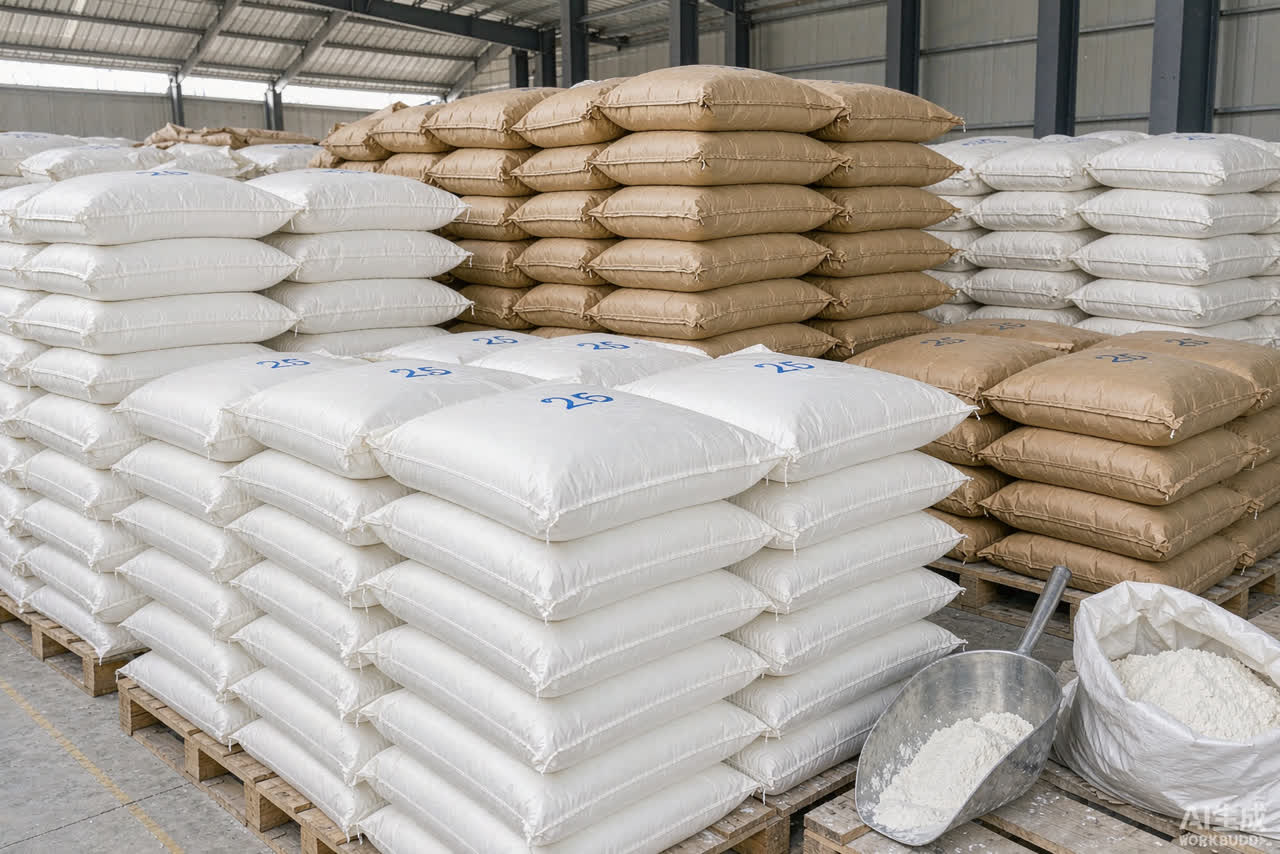
| Packaging — powder | 25 kg PP/PE bags with inner liner, or 500 kg jumbo bags |
They share the same polymer backbone — the powder is our liquid mother liquor after drying (spray-dried or low-temperature dried, by grade). The difference is practical: powder suits dry-mix systems where adding carrier water is unacceptable, while liquid suits admixture plants and ready-mix operations where dosing by volume is convenient.
Use PR9201 for general Portland cement dry-mix systems, WM900 when your binder is calcium aluminate or sulphoaluminate cement, and WT101 for refractory and high-alumina castables. If you are unsure, send us your binder composition and we will recommend the grade or test samples for you.
It disperses and dissolves in mixing water within seconds under normal agitation. In very cold water (below 5°C) dissolution is slower — we recommend premixing the powder into a portion of the mixing water before adding the dry blend.
Practical notes from our technical team on choosing, dosing and comparing PCE.
Why OPC grades retard SAC, what an SAC-grade polymer must do, and how to fix flash set and pinholes.
Worked calculations, liquid-to-powder conversion and the five variables that move the dosage.
Where powder wins, where liquid still makes sense, and how to switch without reformulating.
Our technical sales team replies within 12 working hours with a quotation, technical data sheet and a dosage recommendation for your application.
We ship a free sample within 3 working days so you can verify performance against your own cement, aggregate and mix design before committing to a bulk order.